
Lagos in December isn’t a city; it’s a mood you can’t escape.
The heat hits differently when the “Detty December” energy kicks in. Third Mainland Bridge is basically a parking lot decorated with brake lights, and the air smells like a mix of exhaust fumes, perfume, and a faint blend of the smells of different fried street food. Everyone is moving like they’re late for a miracle.
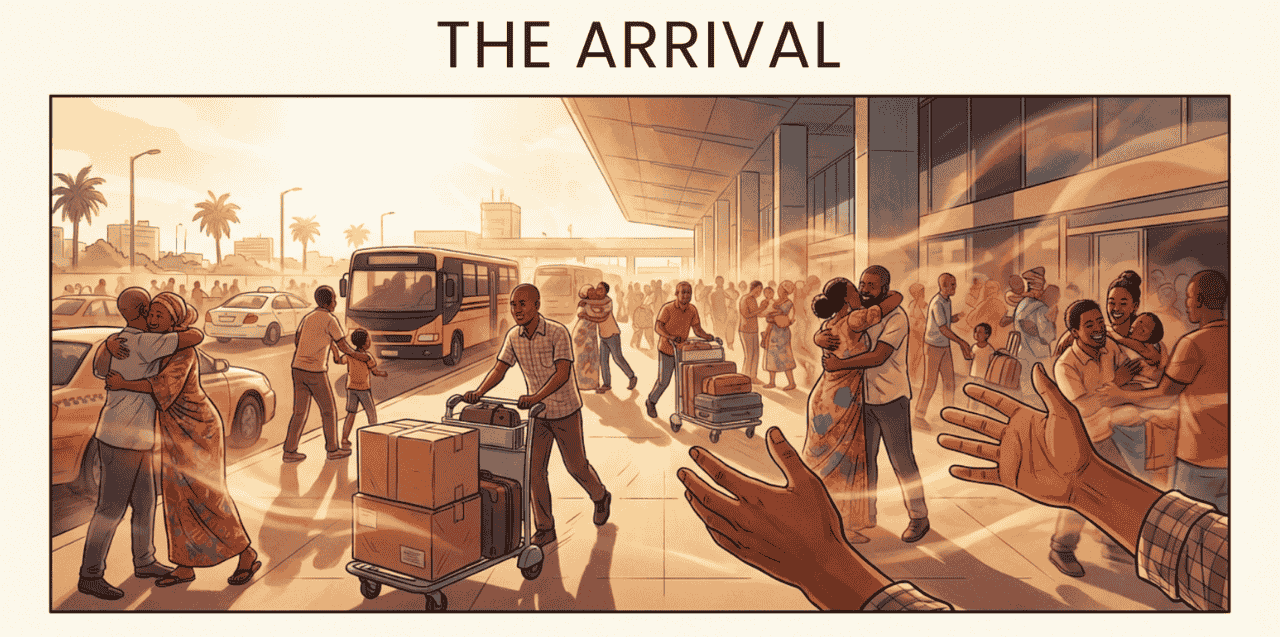
Amina Danjuma stepped out of the arrivals hall and felt the humidity wrap around her like a damp towel. After years in London, the noise was a physical shock. Around her, people were reuniting with that signature Nigerian volume; screams of “Welcome o!”, the frantic dragging of overstuffed suitcases, and the hustle of men trying to “help” you for a small fee.
“Aunty, your bag heavy? I fit help you,” a guy said, already reaching for her trolley.
“I’m fine, thank you,” Amina said, her voice calm. She wasn’t back for two minutes and the pressure to give out “something for the boys” was already bubbling up.
She stopped at a small bank kiosk to change some currency. The lady behind the glass was mid-chat with a colleague about a concert at Eko Hotels.
“Madam, welcome. You want to change? We have a special December package o. If you keep the balance with us for thirty days, the interest rate is juicy. You know, for all the spending you’ll do this period.”
Amina offered a small, tired smile. “Thanks, but I don’t do interest-based accounts. Do you have anything that’s profit-sharing? Or maybe an ethical fund?”
The lady paused, her hand hovering over the calculator. “Ethical? You mean like charity?”
“No, not charity,” Amina chuckled. “Just a system where we share the risk instead of you just charging me for keeping my money. No riba.”
The lady looked at her like she’d just asked for a currency that didn’t exist. “Ah. I think one of our branches in Abuja does that. But for here? Na only the normal one we get for now.”
“No worries,” Amina said, taking her cash. It was always the same. People didn’t see the trap; they just saw the “juicy” numbers.

“Amina! Over here!”
Sola was leaning against his car, looking more like a club promoter than a cousin. He walked towards her to get her bags, and she was sure she could smell Lagos on him; sun, hustle, and a very expensive cologne.
“London babe! Look at you, you’ve added weight,” he joked, throwing her bags into the boot.
“It’s the winter coats, Sola. Don’t start,” she laughed, climbing into the passenger seat.
“Remove it nau, heat go soon wound you ooo.”
As they crawled through the airport exit traffic, Sola’s phone wouldn’t stop buzzing. “Lagos is crazy right now,” he said, gesturing at the billboards flashing Afrobeat and hiphop stars’ posters. “Everyone is trying to ‘cash out’ before January hits. Even the banks are giving out loans like pure water, and people are taking them just to buy tables at shows. It’s madness.”
“It’s more than madness, Sola. It’s a debt trap,” Amina murmured, looking at a billboard for a quick-loan app. “People are borrowing at 20% interest just to look like they’re ‘winning’ for one month.”
“Omo, that’s just how it is. If you don’t show up, you’re a local. By the way,” Sola’s tone shifted. “One guy called me. A Khalid somebody. He asked when your flight was landing.”
Amina frowned. “Khalid? Who is that? I don’t know any Khalid.”
“He said he’s from Alif Capital. Said he’s been following your work and articles on non-interest finance. Honestly, I thought he was one of your London colleagues. How he even got my number is what I don’t understand.”
Amina leaned her head against the window. She had come home to rest, but it seemed her reputation had landed before she did.
Home felt like a sanctuary. Her mother, Hajiya Rahma, met her at the door with a hug that smelled of home-cooked soup and peace.
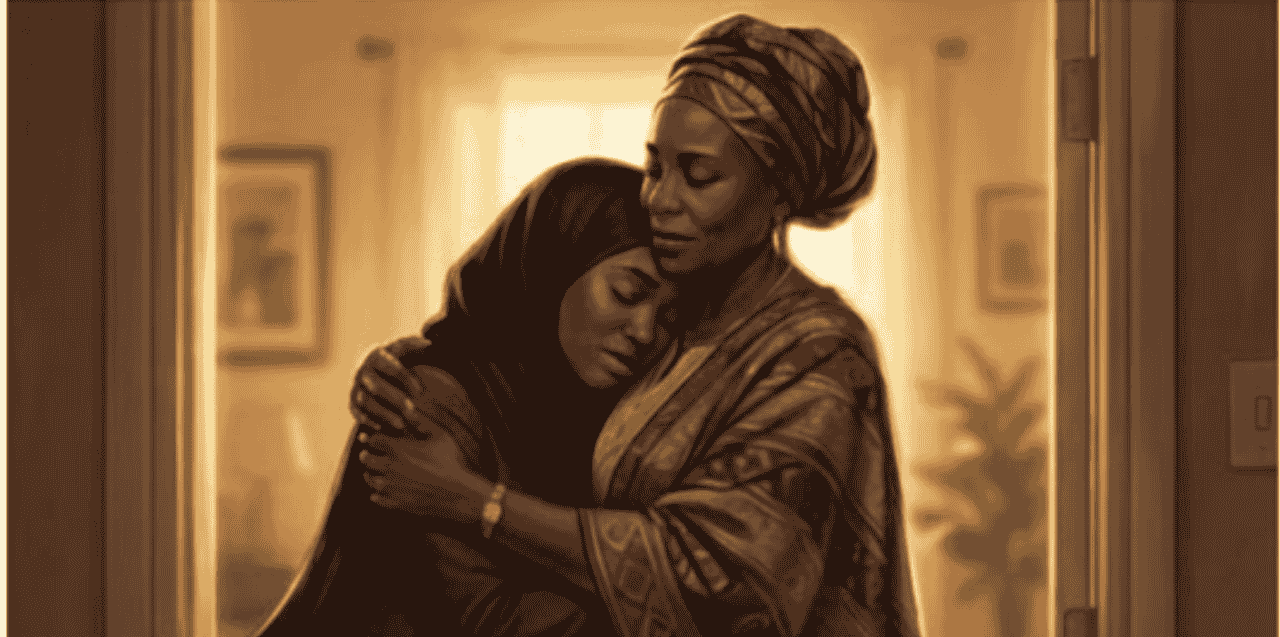
“My daughter, you look tired,” Mama said, holding her hands. “Lagos is loud but you’ll adjust, just don’t let the noise get inside your head. Focus on resting.”
But focus was hard when the phone started ringing an hour later. An unknown number.
“As-salaam alaikum, Amina,” the voice was smooth, the kind of voice that sounds like it’s never had to wait in a queue. “I’m Khalid. I apologize for the directness, but I believe we have a mutual interest in changing how finance works in this country.”
“I’m sorry, how did you get this number?” Amina asked, her voice tightening.
“Lagos is a small village for those with the right tools,” Khalid said lightly. “I’m with Alif Capital. We’re looking into ethical products, and your name is the only one that keeps coming up. Let’s talk tomorrow. Victoria Island. I think you’ll find our proposal… significant.”
The next day, the Alif Capital office was everything Amina expected and disliked; all glass, freezing air-conditioning, and people who looked like they’d sell their soul for a 5% commission.
Khalid was younger than she expected, charming in a way that felt practiced. He slid a document across the mahogany table.
Amina read it. Then she read it again.
“This isn’t non-interest banking, Khalid,” she said, dropping the paper. “You’ve just renamed the interest as an ‘Admin Fee.’ That’s just dressing a wolf in sheep clothes.”
Khalid laughed, leaning back. “Amina, it’s December. People want money for rice, for clothes, for travel. They don’t care about the ‘nature’ of the contract. They just want the cash. We give it to them. It’s a win-win.”
“It’s not a win if the person is still drowning in debt they can’t afford. True ethical finance is about partnership. If the business fails, we share the loss. This? This is just predatory lending with better branding.”
“Well,” Khalid said, his eyes darkening slightly, “that’s why we want you. To fix the language. Think about the salary, Amina. You can do a lot of ‘good’ with that much money.”

Amina walked out into the bright VI sun, feeling unsettled. As she waited for her ride, she noticed a black SUV parked across the street. The driver didn’t look like he was waiting for a passenger. He was looking directly at her.
She pulled out her phone to call Sola, but a notification popped up first. It was a message from an unknown number on WhatsApp.
“Welcome home, Amina. Be careful what you try to ‘fix.’ Some ledgers are better left closed.”
She looked back at the SUV. The engine started.
Lagos was definitely heating up, and it wasn’t just the December sun.







Really love how you engage with your community in such authentic ways 💎