NIB-Education

The Sukuk Protocol: Asset-Backed Wealth vs. Paper Debt

Mark Busaosowo
Published: March 16, 2026

Share this post 👇🏽

Facebook
Twitter
LinkedIn

Imagine the State Government decides to host the biggest Mega-Festival of the decade—or build a massive new highway connecting the mainland to the island—and they need to raise billions of Naira to make it happen.

If you want to invest in this mega-project, how do you ensure your wealth is actually secure?

The Reality of Traditional Bonds

The standard financial approach is the traditional Sovereign or Corporate Bond. It is a highly efficient, globally trusted system of raising capital through Debt-Backed Paper.

The government essentially says to the public, “Lend us ₦10 Million, and we will give you a piece of paper (a bond) promising to pay you back your principal plus a fixed interest rate over 10 years”. In this scenario, you are a creditor holding an IOU.

This is a fantastic model for predictable returns, provided the issuer remains solvent. But at the end of the day, your wealth is tied to a piece of paper and a promise. Standard bonds inherently divorce finance from the real economy, as money is lent to make more money, often without a direct link to physical productivity. Your security relies entirely on the issuer’s creditworthiness, rather than the underlying asset’s value. If the issuer faces a severe economic crisis and defaults, you are left holding a promise they can no longer keep.

Enter the Sukuk Model: Tangible Ownership

At The Alternative Bank, we utilize the Sukuk (Asset-Backed Securities) model. Often referred to as “Islamic Bonds,” Sukuk fundamentally reconnects finance to the real economy.

While conventional bonds represent a debt obligation (an IOU) from the issuer to the investor, Sukuk represents an undivided ownership interest in a tangible asset, project, or service. We don’t want you to just lend money; we want you to own the infrastructure.

Here is how the “Owambe Canopy” theory works in practice:

  • The Purchase: The government says, “We need to buy the massive Marquee Tents for the festival” (or build the actual toll bridge). You and other investors pool your money to buy the physical tents or build the bridge.
  • The Ownership: You legally own a proportional share of that physical asset. Every Kobo raised must be tied to a specific, tangible, income-producing asset.
  • The Income: The government then rents the tents (or the bridge) from your syndicate for a fixed period. Your regular returns do not come from thin-air interest; they come from actual rental income. Investors’ returns are generated directly from the lease, profit, or sale of that specific asset.

The Ultimate Superpower: Co-Owning the Real Economy

Why is this an absolute superpower? Because if the government goes broke, your investment doesn’t vanish into a spreadsheet error.

You and your co-investors still legally own the physical tents, the bricks, and the asphalt. You can technically pack up your tents and lease them to someone else. By shifting from a “Creditor-Debtor” dynamic to a “Co-Owner-Lessee” dynamic, investors are offered a profound layer of security: Asset Backing.

You aren’t just buying government or corporate debt; you are buying a piece of the nation’s infrastructure. You are a co-owner of the real economy.


Share this post 👇🏽

Facebook
Twitter
LinkedIn
0 0 votes
Article Rating
Subscribe
Notify of
guest
0 Comments
Oldest
Newest Most Voted
Inline Feedbacks
View all comments

Subscribe to Updates

Be the first to know when we publish new content! Join the Newsletter today.

Tell us your story

Select your OS

Find the perfect app version for your device by choosing your OS below. You will be redirected to your app store.

Abubakar Muhammad Musa

Summary

Abubakar Muhammad Musa is currently a Sharia Advisor and Consultant for SHAPE Knowledge Services a consulting firm based in Kuwait. He has been involved in product development, Sharia research and approval of Islamic banking products for different clients. His work covers retail banking, corporate banking and project finance deals.

Formerly, Abubakar worked as a Researcher in different units at International Shariah Research Academy for Islamic Finance (ISRA) in Kuala Lumpur, Malaysia. Besides his primary assignments in ISRA, he taught Shariah Rules in Financial Transactions to Chartered Islamic Finance Professional (CIFP) Masters online Students of International Centre for Education in Islamic Finance (INCEIF), Malaysia. He also taught MBA and BBA Students different Islamic Banking and Finance Subjects at University College of Bahrain.

Abubakar holds two Diplomas with distinction, one in Islamic Law and the other in Arabic Language from Al-Imam University Riyadh. He also holds LLB (Hons) degree in Shariah from the same University. He successfully completed his (CIFP) Professional Masters Degree Programme at (INCEIF), Malaysia. He had his internship program on Islamic Banking & Finance at Fajr Capital in Kuala Lumpur. During the programme, Abubakar conducted research relating to product structuring and market development.

Abdurraheem Ahmad Sayi

Summary

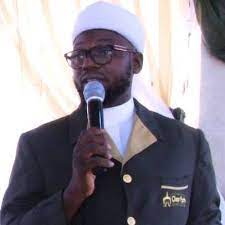
Abdurraheem Ahmad Sayi is a legal practitioner and Consultant of over 16 years of active legal practice. He is currently the principal partner, A.A. Sayi & Co. (Qist Chambers) and Qadi, Independent Shari’ah Panel of Lagos State – a platform, through which he has delivered several judgments of in-depth analysis, widely applauded by leading legal and intellectual icons, including learned Judges, professors of law and Islamic Studies.

He is the Executive Director/C.E.O., ClearPath Islamic Centre (Incorporated), Lekki-Lagos and Chief Imam, SilverPoint Central Mosque, Badore, Ajah-Lagos. Fondly called Imam Sayi, Abdurraheem is the designate Chairman, Shari’ah Advisory Committee, Mutual Benefit Takaaful.

Imam Sayi has also authored a few works, some of which include: The Financial Obligations: a compendium of essays on monetary or material obligations under Islamic Law and Waqf (Charity Endowment): The Governing Principles.

He holds a Certificate on Improving Personal Effectiveness from the Lagos Business School (Pan African University) and he is a recipient of numerous awards and certificates of merits.

Abdulkader Thomas

Education:

Master of Arts Law and Diplomacy, The Fletcher School of Law & Diplomacy.

Bachelor of Arts Arabic & Islamic Studies, The University of Chicago.

Shariah Board Experience:

Bank Muscat Meethaq (2013 – 2017)

Sterling Bank Nigeria (Since 2013)

University Bank, USA (Since 2006)

Summary

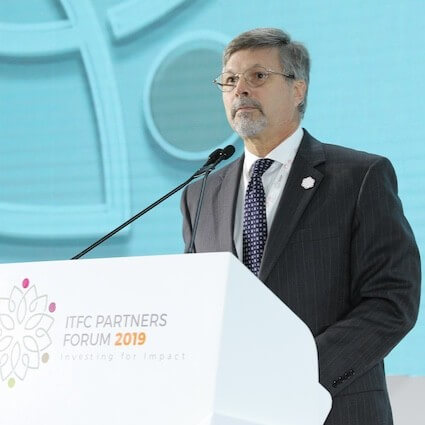
Abdulkader Thomas has over 35 years of diversified financial services experience in major markets. With a Master of Arts Law and Diplomacy from The Fletcher School of Law & Diplomacy and a BA in Arabic & Islamic Studies from The University of Chicago. His areas of activity have included trade finance, real estate finance, securities and alternative finance.

As the general manager of a foreign bank branch in New York, he secured the first US regulatory approvals of Islamic mortgage and instalment credit/sale as banking instruments. Later, he secured US regulatory approval for profit sharing deposits. Abdulkader has been involved in the successful implementation of these products in the US market. With more than 17years Shariah Board Experience in Bank Muscat Meethaq, Sterling Bank Nigeria and University Bank USA, Abdulkader has worked on IFTA projects in Europe, Africa, Southeast Asia, and an authority on Islamic deal structures and securities.

He also serves as a director of Alkhabeer Capital in Jeddah and Chairman of Alkhabeer (DIFC). He is a member of the international advisory board of the Securities Commission of Malaysia, a published author, and an active speaker on Islamic finance.