
Mudarabah Savings Account – AltBank
Mudarabah Savings Account

Your savings should work
as hard as you do.

Upgrade to a Mudarabah Savings Account — where your money doesn't just sit. It grows, ethically. Real profit. Real principles.

Migrate below
Shariah-Compliant ◆  Monthly Profit Distribution ◆  Ethical Investment ◆  ACE Approved ◆  No Hidden Charges ◆  Full Access Savings ◆  Shariah-Compliant ◆  Monthly Profit Distribution ◆  Ethical Investment ◆  ACE Approved ◆  No Hidden Charges ◆  Full Access Savings ◆ 

Migrate to Mudarabah.

Complete this form to instruct AltBank to migrate your existing savings account to a Mudarabah Savings Account.

Your submission is reviewed by our team. We'll confirm your migration via SMS and email.

  • No change to your account number (Option 1)
  • Or open a brand new MSA and transfer your balance (Option 2)
  • Profit credited monthly based on average daily balance
  • 80/20 Profit Sharing Ratio — you earn 20%
  • No lock-in period. Withdraw anytime.

Account Migration Request
All fields are required
Enter your full legal name
10-digit NUBAN account number
Select your preferred migration option
Select your preferred effective date
Please read the Mudarabah Savings Account Agreement before proceeding.

Got questions?

Everything you need to know about the Mudarabah Savings Account.

What is a Mudarabah Savings Account?
+
A Mudarabah Savings Account is a non-interest savings account that allows you earn halal profit through a profit-sharing arrangement with the Bank. It is based on the Mudarabah principle of Islamic finance in line with Shariah principles.
How does the Mudarabah Savings Account work?
+
You provide funds as the investor and provider of funds, and the Bank manages and invests them in Shariah-compliant assets as the Mudarib. Any profit earned is shared between you and the Bank.
Is this the same as a conventional savings account?
+
No. A conventional savings account pays interest, while a Mudarabah Savings Account shares actual profit from Shariah-compliant investments.
What is the difference between a Mudarabah account and a Qard savings account?
+
A Qard savings account does not earn profit, while a Mudarabah savings account allows you to earn profit based on the performance of the underlying asset pool.
Is the profit guaranteed?
+
No. Profit is not guaranteed. The amount you earn may vary from month to month depending on the performance of the underlying investments.
Can I lose money on this account?
+
Yes. Any actual investment loss is borne by the customer, except where the loss arises from the Bank's negligence, misconduct, or breach.
Is this account only for Muslim customers?
+
No. It is available to any eligible customer who is comfortable with the product terms.
Is this product suitable for day-to-day savings?
+
Yes. It is designed to be flexible like a regular savings account, while remaining Shariah-compliant.
Who can open this account?
+
Eligible individuals, minors, joint account holders, businesses, and non-commercial and commercial entities may open the account, subject to the Bank's requirements.
Can existing customers migrate to MSA?
+
Yes. Existing eligible Tier 3 savings accounts may be migrated to the MSA without changing the account number, subject to customer consent and acceptance of the product terms. Migration will not occur without explicit customer instruction.
When will I start earning profit after migration?
+
Profit entitlement starts from the applicable value date after the migration is completed. Profit will be paid monthly.
Are there conditions that must be met before migration?
+
Yes. The account must be in good standing and free of issues such as debit balances, restrictions, or unresolved holds. Migration may not be completed until any restriction is resolved.
Can I keep both a Qard account and a Mudarabah account?
+
Yes, where both account types are available to you.
Can I deposit and withdraw money at any time?
+
Yes, similar to a normal savings account and subject to the Bank's operating rules. There is no strict limit for normal access, but withdrawal frequency may reduce the average balance and affect profit share.
How is my profit calculated?
+
Your profit is calculated based on your average balance, the total pool performance, and the applicable Profit Sharing Ratio.
What is average balance and why does it matter?
+
Average balance is the sum of your daily balances during the month divided by the number of days in that month. It gives a fairer reflection of how much of your money was available for investment during the period.
Is the Profit Sharing Ratio (PSR) fixed forever?
+
No. It may be reviewed from time to time and any change will be communicated to customers.
If I withdraw money during the month, will it affect my profit?
+
Yes. A withdrawal reduces your average balance and may reduce your profit for that period.
Will dormant accounts earn profit?
+
Eligible balances in dormant accounts may still earn profit, subject to the Bank's product rules and regulatory requirements.
What is Profit Equalization Reserve (PER)?
+
PER is a reserve set aside from the Mudarabah pool to help smooth profit payouts across periods. It helps reduce extreme fluctuations in payouts from one period to another.
Does PER mean my return is guaranteed?
+
No. PER does not create a fixed or guaranteed return. It may support profit payouts within approved limits, but it does not guarantee any amount.
Can PER be used to cover losses on investments?
+
No. PER is not meant to cover actual capital losses. Its use is governed by approved policy and internal oversight.
How does the Bank invest my funds?
+
Funds are pooled and invested in approved Shariah-compliant assets and opportunities, including eligible financing assets, government-backed instruments, commodities, and other Shariah-compliant opportunities.
Can I choose where my funds are invested?
+
No. The Bank manages the investments on behalf of all customers in the pool.
Can I request clarification on the risks before opening the account?
+
Yes. You should ask for full product disclosure before opening or migrating your account.
Are there account maintenance fees?
+
There are no special maintenance fees for the product, except applicable regulatory and service-related charges such as stamp duty, SMS alert charges, card charges, and ATM charges.
Can I use USSD, mobile app, and ATMs with this account?
+
Yes, subject to the Bank's available channels and service setup for your account type.
Can I transfer money from this account?
+
Yes, subject to the Bank's normal transfer rules and channel limits. You will also receive transaction alerts subject to your alert setup.
What happens if I want to opt out of the product?
+
You may request to switch to another eligible account type or close the account, subject to the Bank's process. The account has no fixed tenure.
Who do I contact for more information?
+
You can contact your Relationship Manager, customer service team, or the nearest branch for assistance.

Tell us your story

Select your OS

Find the perfect app version for your device by choosing your OS below. You will be redirected to your app store.


Abubakar Muhammad Musa

Summary

Abubakar Muhammad Musa is currently a Sharia Advisor and Consultant for SHAPE Knowledge Services a consulting firm based in Kuwait. He has been involved in product development, Sharia research and approval of Islamic banking products for different clients. His work covers retail banking, corporate banking and project finance deals.

Formerly, Abubakar worked as a Researcher in different units at International Shariah Research Academy for Islamic Finance (ISRA) in Kuala Lumpur, Malaysia. Besides his primary assignments in ISRA, he taught Shariah Rules in Financial Transactions to Chartered Islamic Finance Professional (CIFP) Masters online Students of International Centre for Education in Islamic Finance (INCEIF), Malaysia. He also taught MBA and BBA Students different Islamic Banking and Finance Subjects at University College of Bahrain.

Abubakar holds two Diplomas with distinction, one in Islamic Law and the other in Arabic Language from Al-Imam University Riyadh. He also holds LLB (Hons) degree in Shariah from the same University. He successfully completed his (CIFP) Professional Masters Degree Programme at (INCEIF), Malaysia. He had his internship program on Islamic Banking & Finance at Fajr Capital in Kuala Lumpur. During the programme, Abubakar conducted research relating to product structuring and market development.

Abdurraheem Ahmad Sayi

Summary

Abdurraheem Ahmad Sayi is a legal practitioner and Consultant of over 16 years of active legal practice. He is currently the principal partner, A.A. Sayi & Co. (Qist Chambers) and Qadi, Independent Shari’ah Panel of Lagos State – a platform, through which he has delivered several judgments of in-depth analysis, widely applauded by leading legal and intellectual icons, including learned Judges, professors of law and Islamic Studies.

He is the Executive Director/C.E.O., ClearPath Islamic Centre (Incorporated), Lekki-Lagos and Chief Imam, SilverPoint Central Mosque, Badore, Ajah-Lagos. Fondly called Imam Sayi, Abdurraheem is the designate Chairman, Shari’ah Advisory Committee, Mutual Benefit Takaaful.

Imam Sayi has also authored a few works, some of which include: The Financial Obligations: a compendium of essays on monetary or material obligations under Islamic Law and Waqf (Charity Endowment): The Governing Principles.

He holds a Certificate on Improving Personal Effectiveness from the Lagos Business School (Pan African University) and he is a recipient of numerous awards and certificates of merits.
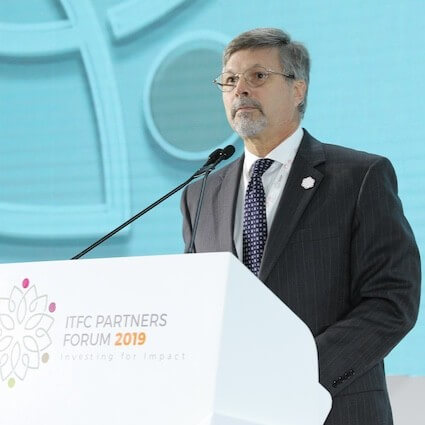
Abdulkader Thomas

Education:

Master of Arts Law and Diplomacy, The Fletcher School of Law & Diplomacy.

Bachelor of Arts Arabic & Islamic Studies, The University of Chicago.

Shariah Board Experience:

Bank Muscat Meethaq (2013 – 2017)

Sterling Bank Nigeria (Since 2013)

University Bank, USA (Since 2006)

Summary

Abdulkader Thomas has over 35 years of diversified financial services experience in major markets. With a Master of Arts Law and Diplomacy from The Fletcher School of Law & Diplomacy and a BA in Arabic & Islamic Studies from The University of Chicago. His areas of activity have included trade finance, real estate finance, securities and alternative finance.

As the general manager of a foreign bank branch in New York, he secured the first US regulatory approvals of Islamic mortgage and instalment credit/sale as banking instruments. Later, he secured US regulatory approval for profit sharing deposits. Abdulkader has been involved in the successful implementation of these products in the US market. With more than 17years Shariah Board Experience in Bank Muscat Meethaq, Sterling Bank Nigeria and University Bank USA, Abdulkader has worked on IFTA projects in Europe, Africa, Southeast Asia, and an authority on Islamic deal structures and securities.

He also serves as a director of Alkhabeer Capital in Jeddah and Chairman of Alkhabeer (DIFC). He is a member of the international advisory board of the Securities Commission of Malaysia, a published author, and an active speaker on Islamic finance.